|
Jiayang Shi I am currently a PostDoc researcher at Research Institute for Mathematics and Computer Science (CWI), Amsterdam, the Netherlands, supervised by Tristan van Leeuwen. My research focuses on solving inverse problems in imaging using learned algorithms, with applications in Computed Tomography (CT) and beyond.Prior to this, I worked as a PhD student at Leiden University from 2021 to 2025, supervised by Daan Pelt and Joost Batenburg. My PhD dissertation is Leveraging Prior Knowledge for Learning-based Approaches to Computed Tomography. I earned my bachelor's degree in 2013 from Hangzhou, China, and completed my master's in 2021 in Karlsruhe, Germany. Email / Google Scholar / GitHub / LinkedIn |
|
ResearchGrouped by topic — click a category to expand. |
Generative Models for CT Reconstruction2 papers
|
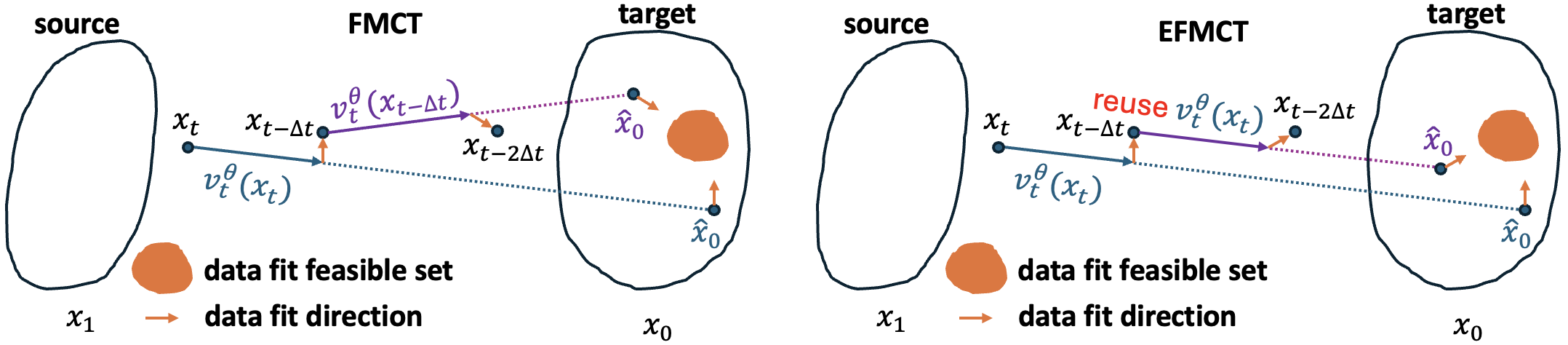
Efficient Flow Matching for Sparse-View CT Reconstruction
Jiayang Shi, Lincen Yang, Zhong Li, Tristan van Leeuwen, Daan Pelt, Joost Batenburg International Conference on Medical Image Computing and Computer Assisted Interventions (MICCAI) , 2026 website / code / arXiv We propose the first flow-matching-based framework for sparse-view CT reconstruction. Motivated by the strong temporal correlation of velocity fields across time steps, we introduce an efficient variant that reuses previously predicted velocities to significantly reduce computational cost. |
|
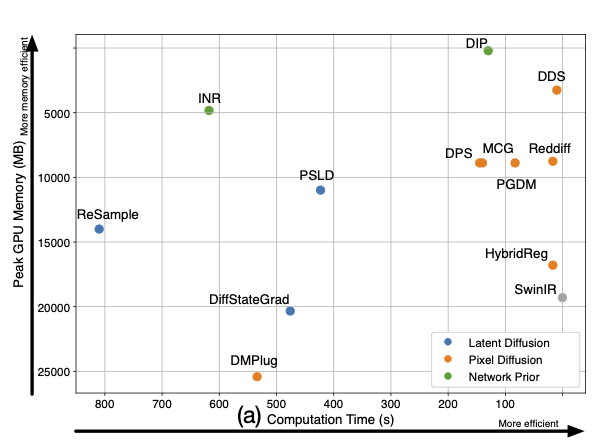
DM4CT: Benchmarking Diffusion Models for Computed Tomography Reconstruction
Jiayang Shi, Daan Pelt, Joost Batenburg International Conference on Learning Representations (ICLR) , 2026 website / code / dataset / openreview DM4CT is a comprehensive benchmark for diffusion-based methods in CT reconstruction. It systematically compares ten state-of-the-art diffusion models alongside modern learning-based approaches (e.g., Gaussian Splatting and INRs) and classical reconstruction algorithms across diverse CT datasets. The benchmark provides detailed insights into reconstruction quality, efficiency, and practical trade-offs. In addition, we introduce a new real-world high-resolution synchrotron CT dataset to facilitate realistic evaluation of CT reconstruction methods. |
CT Image Quality Enhancement3 papers
|
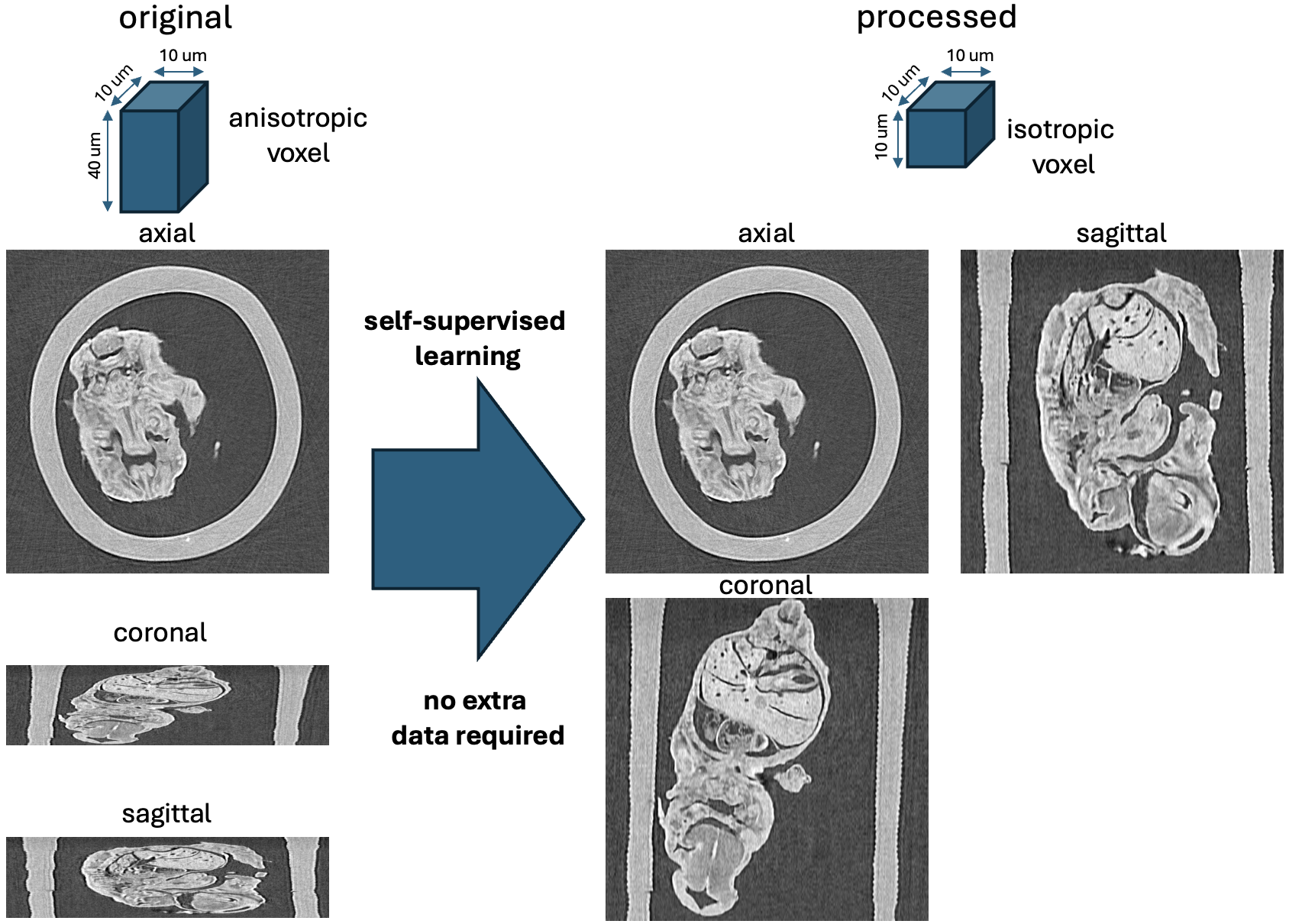
Self-supervised Resolution Enhancement for Anisotropic Volumes in Edge Illumination X-ray Phase Contrast Micro-Computed Tomography
Jiayang Shi, Louisa Brown, Amir Zekavat, Daan Pelt*, Charlotte Hagen* Tomography of Materials and Structures , 2025 code / paper * = Equal contribution A self-supervised approach designed for edge illumination X-ray phase contrast micro-CT to enhance the resolution of anisotropic volumes. |
|
Multi-stage Deep Learning Artifact Reduction for Parallel-beam Computed Tomography
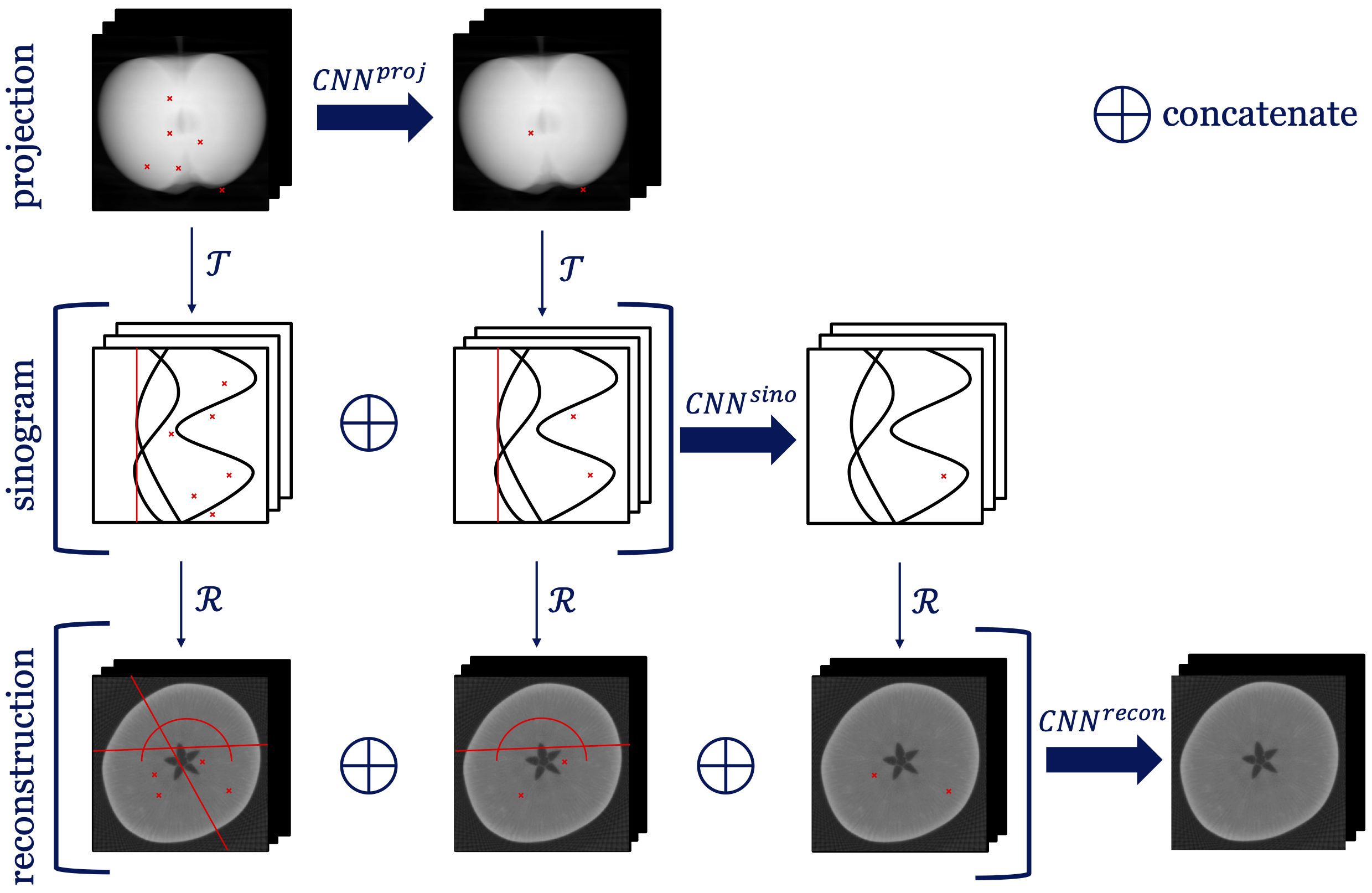
Jiayang Shi, Daan Pelt, Joost Batenburg Journal of Synchrotron Radiation, 2025 code / arXiv / paper A artifact reduction method for CT images based on deep learning. Three CNNs reduce artifacts in a subsequent manner, targeting different types of artifacts. This method is seamlessly integrated into existing CT pipelines. |
Show 1 more paperShow fewer papers
|
SR4ZCT: Self-supervised Through-plane Resolution Enhancement for CT Images with
Arbitrary Resolution and Overlap
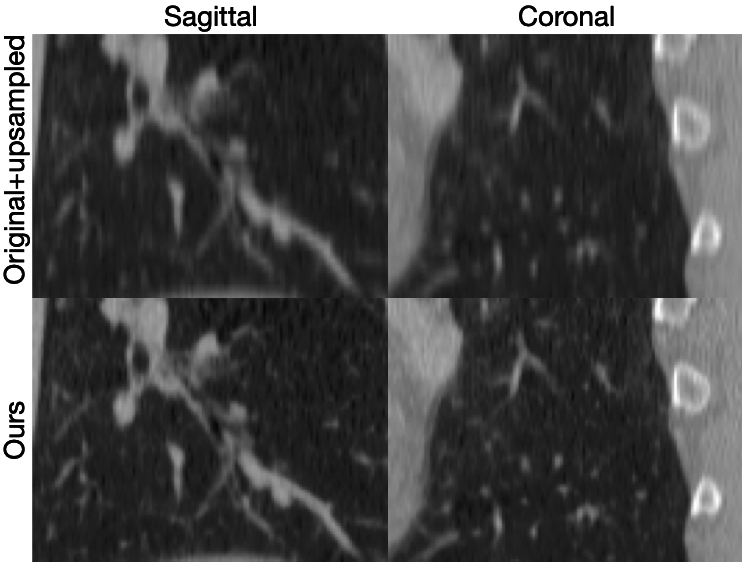
Jiayang Shi, Daan Pelt, Joost Batenburg Machine Learning in Medical Imaging (MLMI) in conjunction with MICCAI , 2023 code / proceeding / paper A self-supervised approach utilizing off-axis training to improve the resolution of through-plane CT scans. This method is trained using in-plane images and applied to through-plane images, offering flexibility with any resolution and overlap. |
Neural Rendering (NeRF-style) CT Reconstruction1 paper
|
Implicit Neural Representations for Robust Joint Sparse-View CT Reconstruction
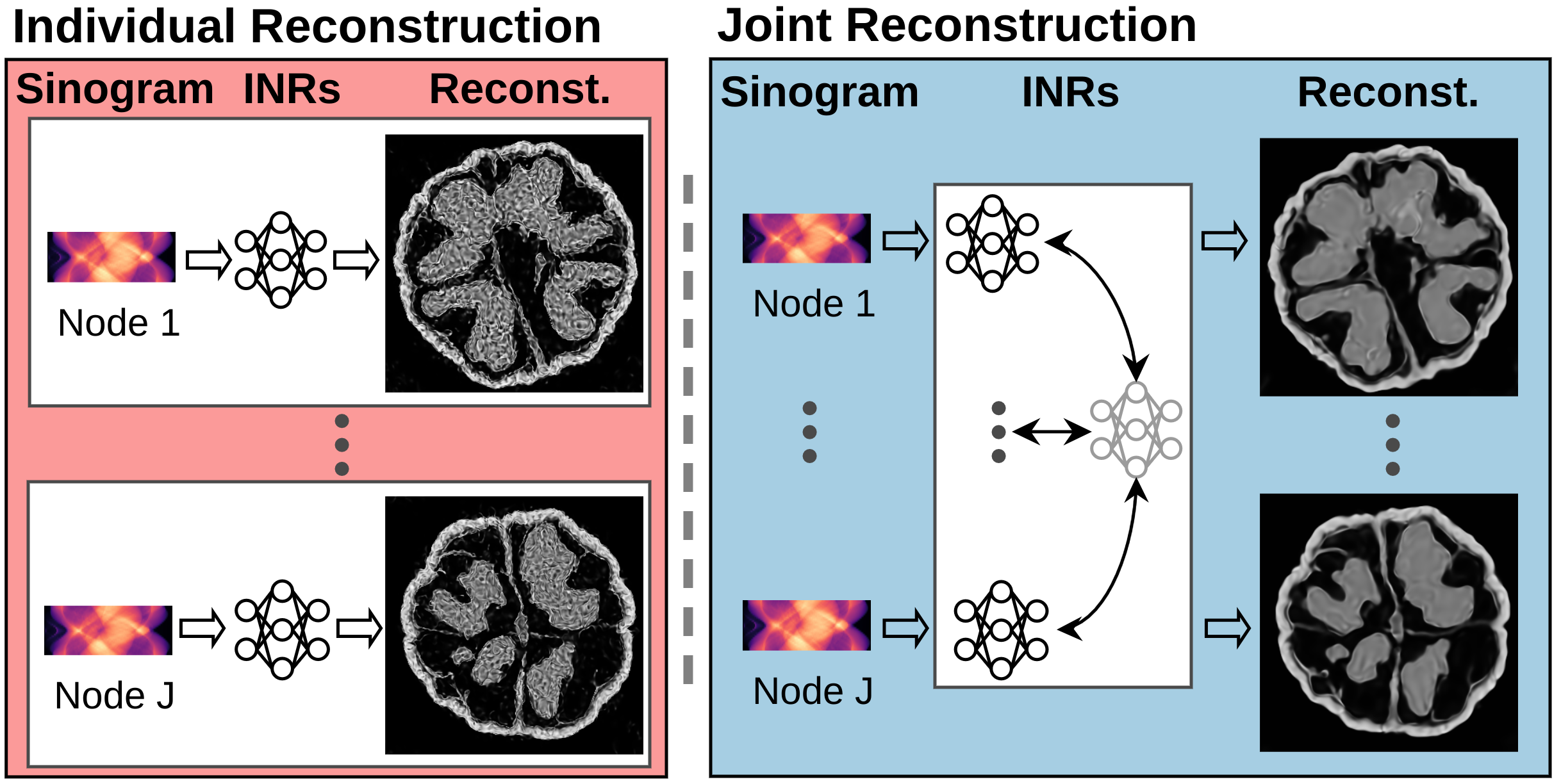
Jiayang Shi*, Junyi Zhu*, Daan Pelt, Joost Batenburg, Matthew Blaschko Transactions on Machine Learning Research (TMLR) , 2024 code / openreview / paper * = Equal contribution A novel Bayesian framework for joint reconstruction of multiple objects from sparse-view CT scans using Implicit Neural Representations (INRs) to improve reconstruction quality. By capturing shared patterns across multiple objects with latent variables, our method enhances the reconstruction of each object, increases robustness to noise, and accelerates the learning process. |
Industrial CT Applications2 papers
|
A Comparative Study of Supervised and Self-Supervised Denoising Techniques for Defect Segmentation in Industrial CT Imaging
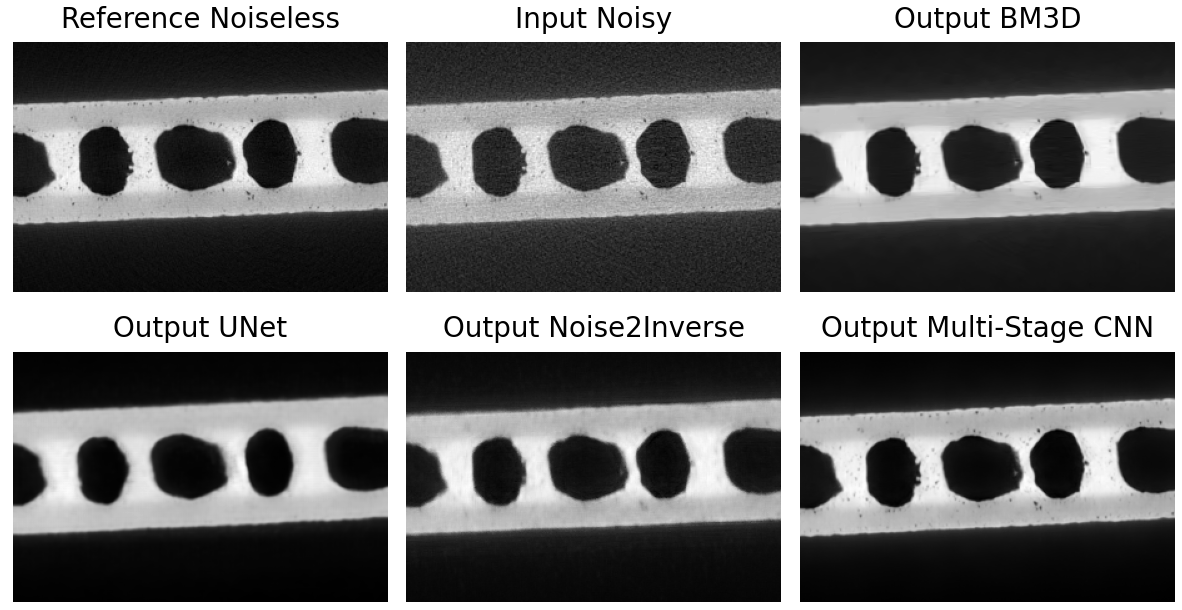
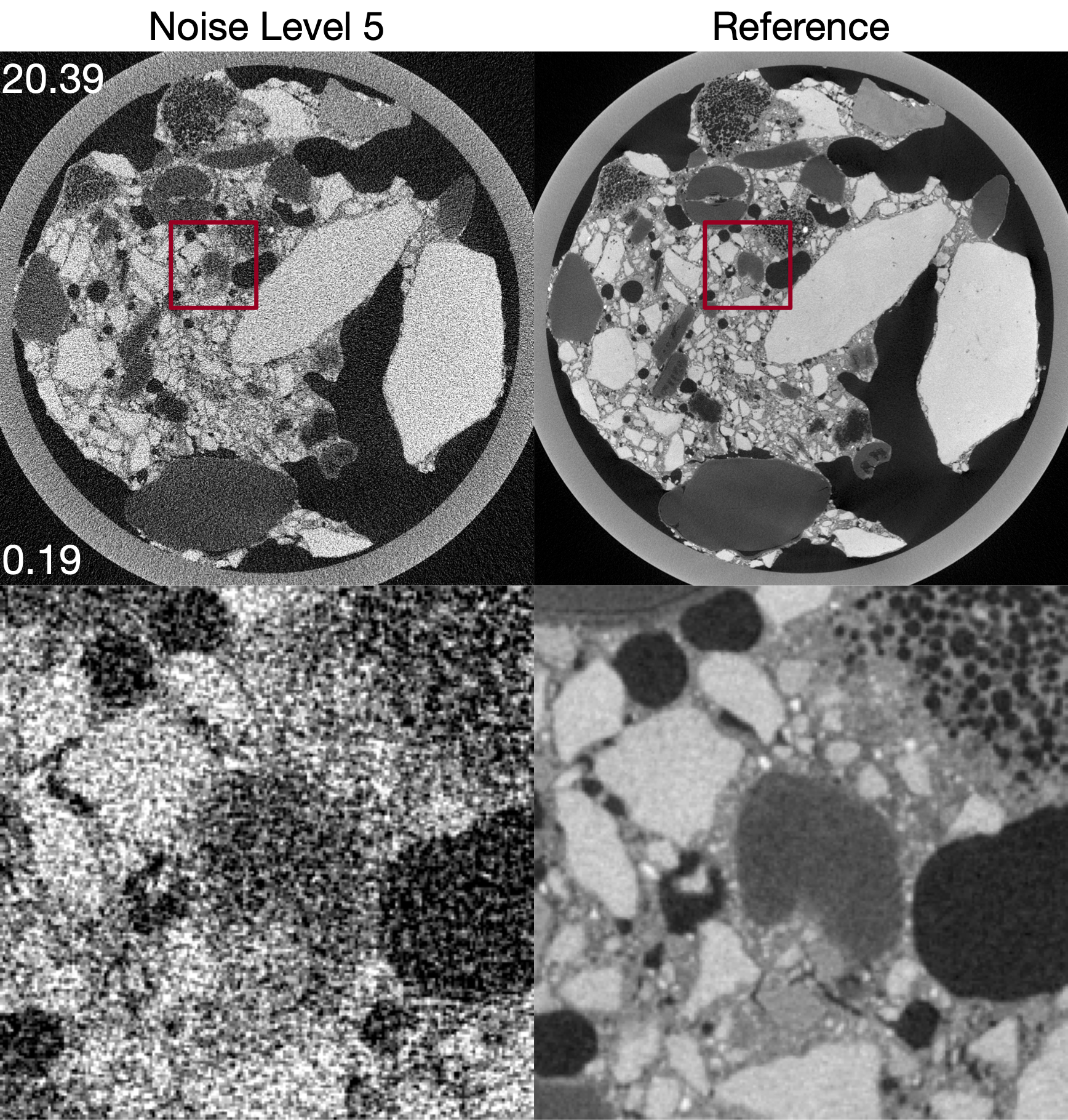
Virginia Florian, Jiayang Shi, Willem Jan Palenstijn, Daniël M. Pelt, Joost Batenburg, Thomas Lang, Christoph Heinzl, Christian Kretzer, Stefan Kasperl, Dominik Wolfschläger, Robert H. Schmitt International Conference on Industrial Computed Tomography (iCT) , 2025 proceeding / doi A study of how the choice of denoising method affects downstream defect detection in fast-scan industrial CT. BM3D, a supervised UNet, the self-supervised Noise2Inverse and a multi-stage CNN are compared on two real aluminium samples, scored both on image quality (PSNR/SSIM) and on the Dice score of the defects segmented from their outputs. Denoisers that look good by image-quality metrics can erase the small, low-contrast pores that matter, showing that the denoiser must be selected for the analysis task and not for the metric alone. |
|
LoDoInd: Introducing A Benchmark Low-dose Industrial CT Dataset and Enhancing Denoising with 2.5D Deep Learning Techniques
Jiayang Shi, Omar Elkilany, Andreas Fischer, Alexander Suppes, Daan Pelt, Joost Batenburg International Conference on Industrial Computed Tomography (iCT) , 2024 code / dataset / proceeding / paper A Benchmark Low-dose Industrial CT Dataset Tailored for Deep Learning: This work introduces a dataset specifically designed for industrial CT applications, emphasizing deep learning approaches. It features a comprehensive analysis comparing the effectiveness and efficiency of 2D, 2.5D, and 3D training methodologies in the context of denoising and image enhancement. |
Inverse Problem in Light Field Imaging1 paper
|
Spectral reconstruction and disparity from spatio-spectrally coded light fields via
multi-task deep learning
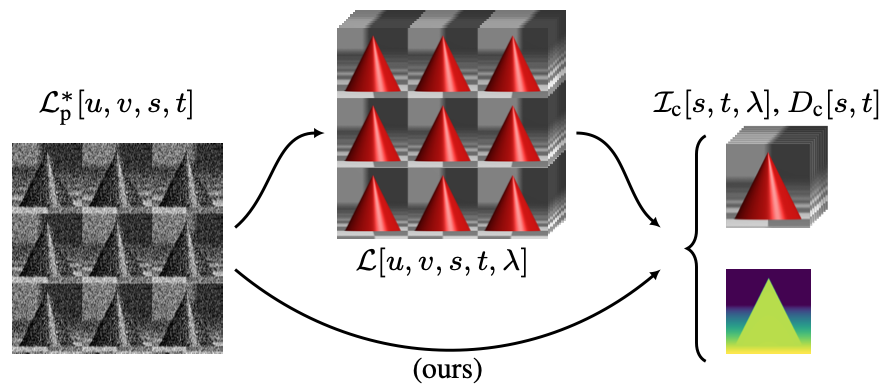
Maximilian Schambach, Jiayang Shi, Michael Heizmann International Conference on 3D Vision (3DV) , 2021 code / proceeding / arXiv A novel method to reconstruct a spectral central view and its aligned disparity map from spatio-spectrally coded light fields using multi-task deep learning. |
Learning Theory1 paper
|
Does Compression Imply Generalization? A Minimum Description Length Perspective
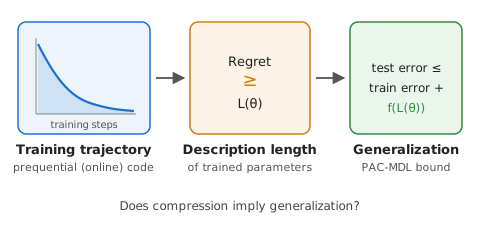
Lincen Yang, Jiayang Shi, Nan Pu, Daan Pelt, Matthijs van Leeuwen, Zhong Li, Shujian Yu Conference on Neural Information Processing Systems (NeurIPS), 2026 code / OpenReview Why do over-parameterized networks generalize? From a minimum description length perspective, we propose the prequential regret, computable from the training trajectory alone, and show that it upper-bounds the description length of the trained parameters, which in turn yields a PAC-MDL generalization bound. Empirically, the regret closely tracks the generalization error on CIFAR-10 and CIFAR-100. |
Graph Neural Networks and Anomaly Detection2 papers
|
Graph Neural Network based Log Anomaly Detection and Explanation
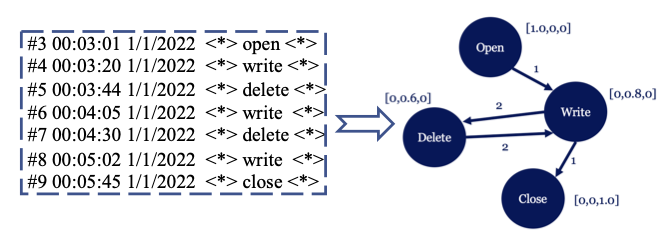
Zhong Li, Jiayang Shi, Matthijs van Leeuwen Full paper on Data Mining and Knowledge Discovery (DMKD), 2026 / short paper on International Conference on Software Engineering (ICSE), 2024 code / arXiv / short paper Graph neural network for log anomaly detection. |
|
Cross-Domain Graph Level Anomaly Detection
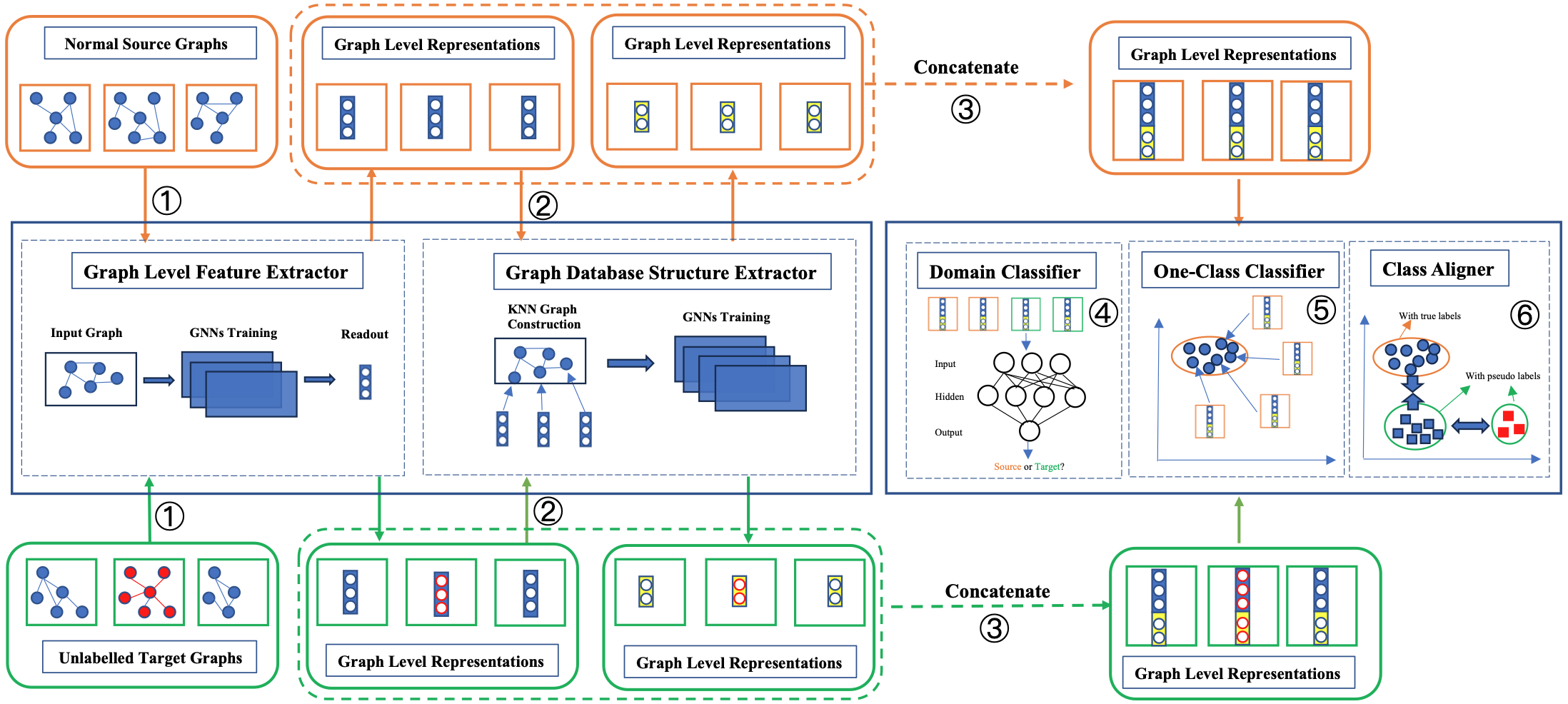
Zhong Li, Sheng Liang, Jiayang Shi, Matthijs van Leeuwen IEEE Transactions on Knowledge and Data Engineering (TKDE), 2024 code / paper Unsupervised cross-domain graph level anomaly detection. |
Surveys: Diffusion for Tabular Data & RL on LLMs2 papers
|
Diffusion Models for Tabular Data: Challenges, Current Progress,
and Future Directions
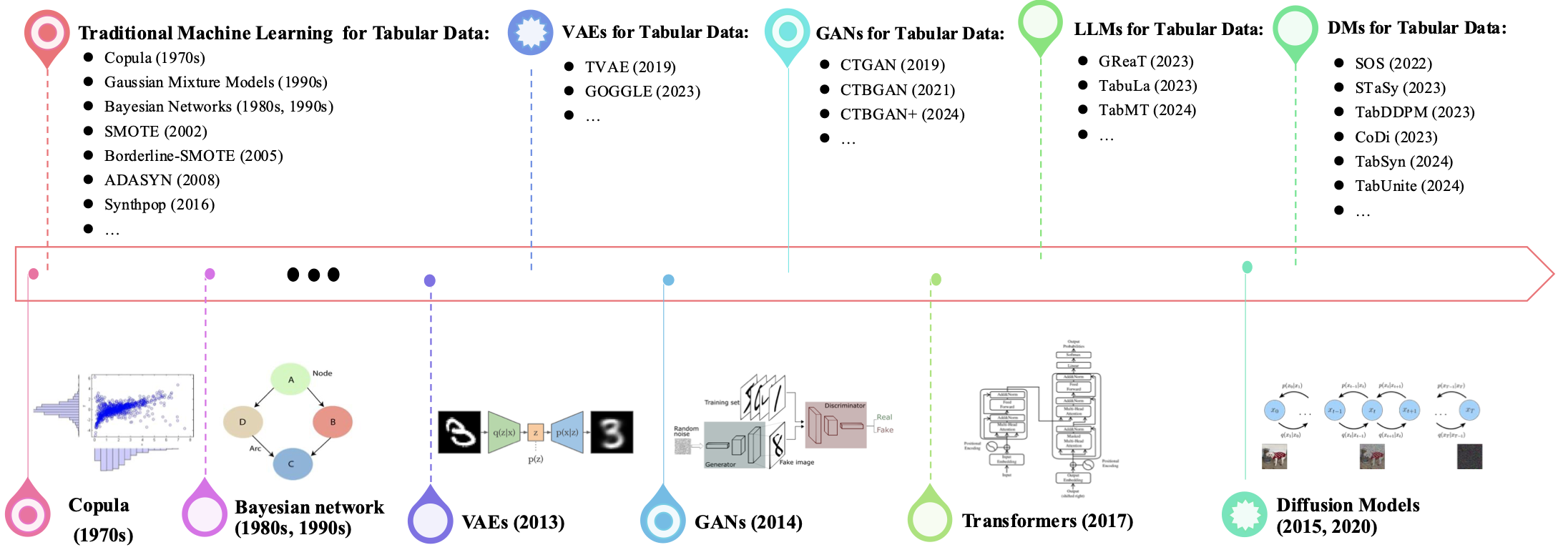
Zhong Li, Qi Huang, Lincen Yang, Jiayang Shi, Zhao Yang, Niki Van Stein, Thomas Bäck, Matthijs van Leeuwen Under review, 2026 code / paper Survey paper on diffusion models for tabular data. |
|
Modularized Reinforcement Learning on LLMs: From MDP Creation to Exploration
and Learning
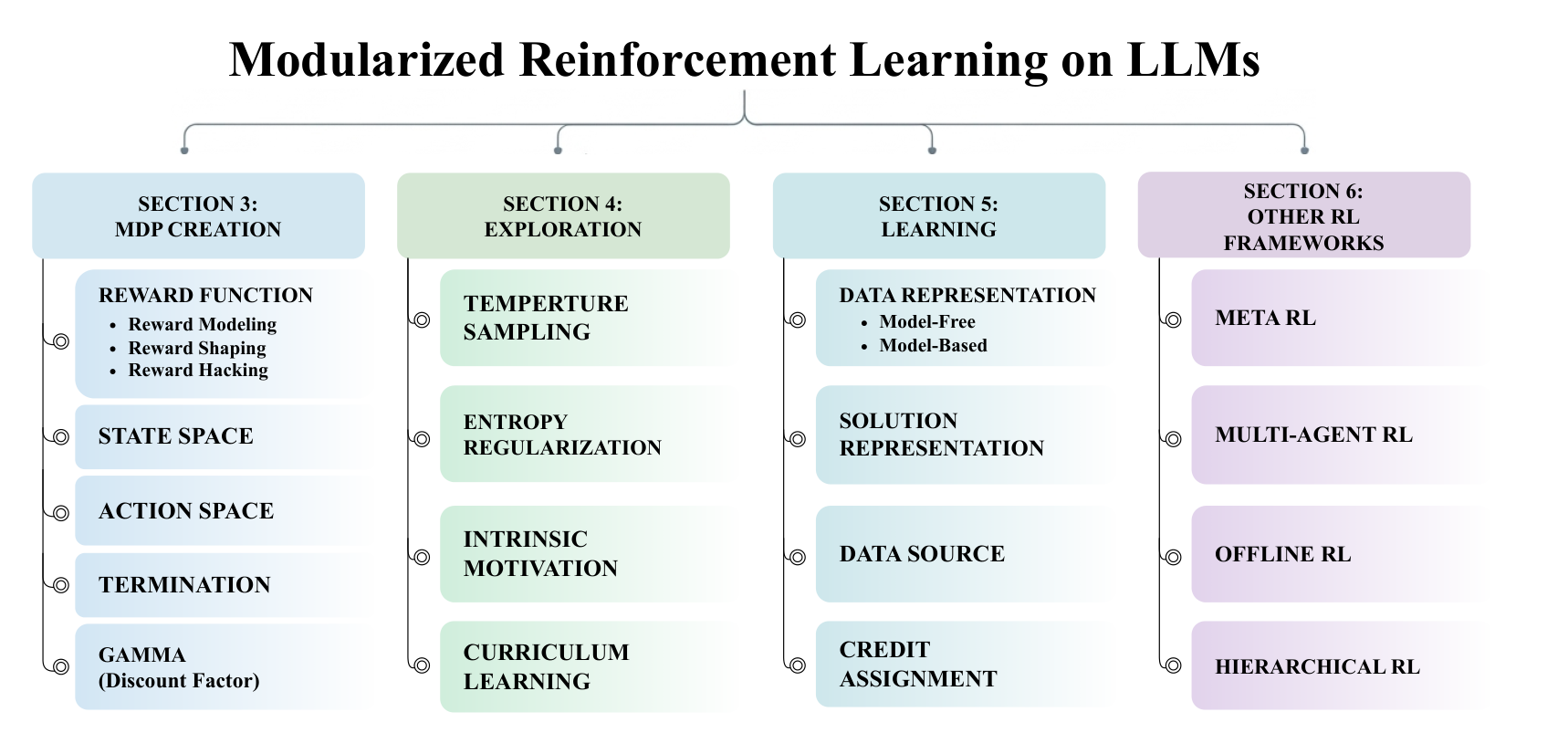
Zhao Yang, Yuxuan Jiang, Ting-Chih Chen, Lincen Yang, Annie Wong, Chao Gao, Jacob E. Kooi, Zhong Li, Jiayang Shi, Kevin Qiu, Qi Huang, Xinrui Zu, Shiping Yang, Hengyuan Zhang, Ngai Wong, Filip Ilievski, Shujian Yu, Aske Plaat, Zhaochun Ren, Mark Hoogendoorn, Vincent François-Lavet Under review, 2026 arXiv / paper Survey paper on reinforcement learning for LLM post-training. |
Grants and Awards |
| Young Researcher and Innovator Conference Grant, EU COST Action CA24131 (ENRICH), 2026 |
Teaching Assistant |
|
Computational Imaging and Tomography 2022 spring & 2024 spring & 2025 spring
Statistics for Computer Scientists, 2023 fall Computer Vision, 2024 fall |
Supervised Thesis |
|
Donghang Lyu (master student): Res-Swin: Effective Combination of ResNet and Swin Transformer for
LDCT Denoising
Omar Elkilany (master student@TUM & WayGate): Beam Hardening Correction using Implicit Neural Representations Jan Zuromski (master student): Classifier Guided Inversion for Image Reconstruction |